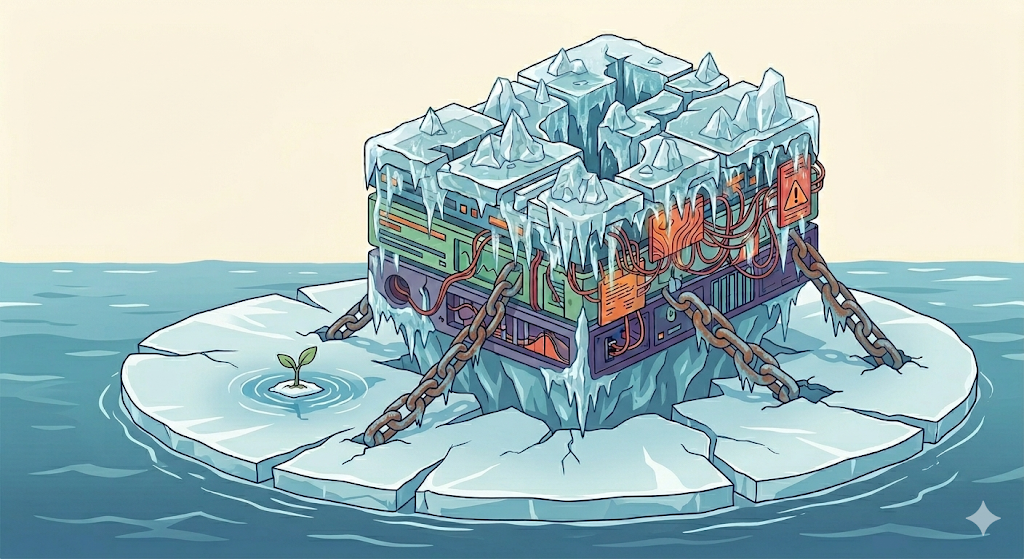

Direct selling organizations frequently struggle to reconcile their specialized needs with the demand for a modern ecommerce experience. The conventional response has been to build custom storefronts and cart systems from scratch. While these internal projects initially solve for a unique business rule, they often create a long-term, unsustainable burden on internal technical teams. This burden is the accumulation of technical debt, and it actively prevents companies from adopting new retail capabilities.
Building an internal ecommerce engine is often seen as a necessary step for maintaining control, but it creates a hidden, long-term trade-off. What begins as a specialized tool eventually becomes a "frozen" system that requires continuous, resource-intensive upkeep just to remain operational.
The Unseen Cost of Internal Ownership
Technical debt is not a temporary problem that can be resolved with one large development effort. It is the result of continuous, small compromises made over time to launch features quickly. This debt compounds, leading to significant limitations:
- Resource Drain: Internal teams spend a disproportionate amount of their time on patching security, managing server infrastructure, and ensuring PCI compliance rather than building growth-driving tools.
- Feature Lag: Implementing a new retail trend, such as "shop the look" or a one-click checkout, becomes a multi-month custom project rather than a simple configuration.
- Integration Brittleness: Connecting new, critical services, like an influencer management platform or an updated analytics tool, requires complex, custom middleware that is difficult to maintain and troubleshoot.
This creates a system that is "frozen" in time, unable to easily adapt to external changes. The cost of owning the entire technical stack becomes a persistent, silent constraint on any strategic initiative.
Breaking the Cycle of High-Cost Upkeep
A different approach allows direct selling brands to separate their required business logic from the ecommerce presentation layer. A standard commerce platform can manage the front-end customer experience, while a dedicated coordination engine connects that experience to the specialized rules of direct selling. This model avoids the need to rebuild foundational ecommerce functionality.
Choosing a coordination layer like ShopIQ provides significant operational advantages:
- Reduced Technical Load: Security, infrastructure stability, and core cart updates are handled by the platform, not by your internal team.
- Faster Deployment: New features can be launched using maintainable patterns rather than entirely new custom coding.
- Lower Implementation Costs: The structured architecture avoids the high expense and unpredictability of from-scratch development.
By adopting a coordination approach, direct selling companies can gain the speed and design advantages of a global commerce leader without sacrificing their required backend rules. This resolves the conflict between a modern customer experience and commission integrity, creating a predictable way to build and scale.
Visit www.shopiq.com or email sales@shopiq.com to learn more about how we can help you shift your focus from technical debt to growth.
.jpeg)
.jpeg)

.png)